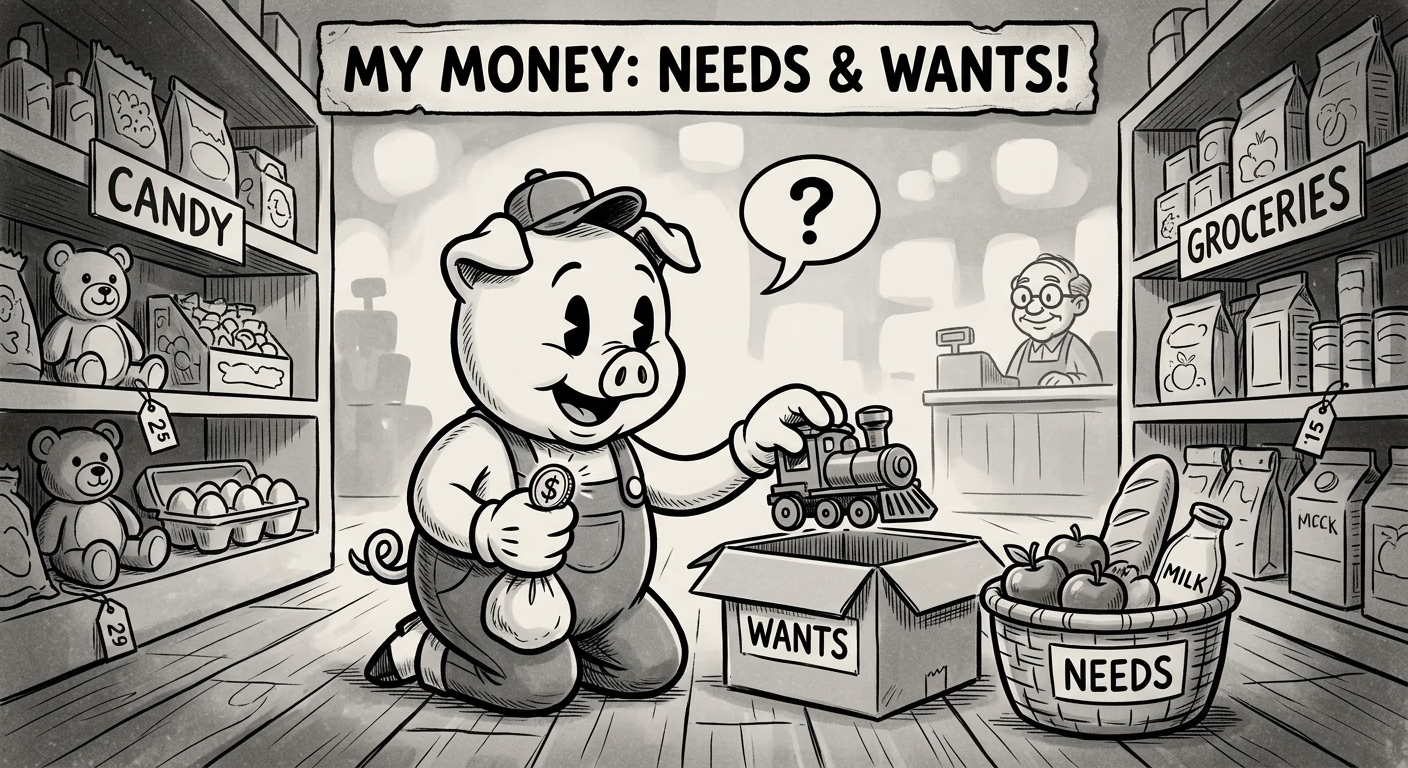
Needs or Wants? A Simple Decision Tree to Help Kids Stop Overspending
Needs or Wants? A Simple Decision Tree to Help Kids Stop Overspending
You know the moment. You’re three aisles from the checkout, your kid spots something glittery and battery-powered, and suddenly it’s the only thing standing between them and total happiness. “But I NEED it.”
No, buddy. You want it. And that gap — between need and want — is one of the most useful things you can teach a kid before they’re old enough to have a debit card of their own.
The good news: you don’t need a lecture or a spreadsheet. You need three questions your kid can ask themselves, every time, until it becomes a habit.
Why “Needs vs Wants” Is the First Real Money Skill
Most money skills sit on top of this one. Saving, budgeting, waiting before you buy — all of it starts with being able to tell the difference between “I have to have this” and “this would be fun to have.”
It sounds obvious to adults. It isn’t to an 8-year-old, and it’s not as common a lesson as you’d think. The OECD’s 2024 financial literacy research found that only about two in three students had ever been taught the difference between spending on needs and wants in school. That means a lot of kids are figuring it out by trial and error — usually with your money.
Here’s the part that matters most for you as a parent: the same research found that kids who get to make their own spending decisions, and who talk about money with their parents, end up more financially capable than kids who don’t. Sorting needs from wants isn’t busywork. It’s the foundation that lets a kid eventually run their own budget without you hovering.
The Kid Decision Tree: 3 Questions Before You Buy
The whole point is to give your child something they can run on their own, in the toy aisle, without you. Three questions, in order. If they get a clear “no” early, they have their answer.
Question 1 — Do I need this to be safe, healthy, or able to do my day?
This is the actual definition of a need, in kid language. Food, a warm coat, shoes that fit, the notebook for school. If the answer is yes, it’s a need. Most of the time, the answer is no — and that’s fine. The point isn’t to make wants feel bad. It’s to name them honestly.
Question 2 — Will I still care about it in a week?
This is the impulse filter. Half of what kids “have to have” is gone from their minds by dinner. Asking this out loud teaches them to notice the difference between a real desire and a shiny five-minute one. For bigger wants, you can stretch it: “Let’s check back on Saturday and see if you still want it.”
Question 3 — Is this the best use of my money right now?
This is the trade-off question, and it’s the one that builds real budgeting muscle. If they buy this, what can’t they buy? Are they saving for something bigger? Spending their own money forces a choice in a way that spending yours never will.
Three questions. Need, impulse, trade-off. A kid can memorize that.
Make It Visual (Why Sorting Beats Lecturing)
Kids this age learn by sorting and seeing, not by hearing you explain economics. So make it physical.
At home, try two jars, two columns on the fridge, or a quick sorting game: name ten things and have them drop each into “need” or “want.” You’ll be surprised how fast they get sharp at it — and how fast they start catching you. (“Dad, is that coffee a need or a want?”)
The visual version is also why so many families lean on a kids’ money app to make the categories real. When a child can see their money living in separate buckets — money to save, money to spend, money to give — the abstract idea of “where should this dollar go” turns into something they can actually look at and move around. Sorting stops being a lesson and starts being how they handle money.
A Real Example: The $20 and the Toy Aisle
Say your kid has $20 of their own and we’re standing in front of a $15 toy.
Run the tree. Do I need it to be safe, healthy, or do my day? No — it’s a want, and we say so plainly. Will I still care about it in a week? Honestly… maybe not. Is this the best use of my money right now? Well — they were saving for a $40 LEGO set. Fifteen dollars on this toy means the LEGO set gets a lot further away.
Sometimes they buy it anyway. Sometimes the math clicks and they put it back. Either way, they made the call — and they felt the trade-off in their own gut instead of hearing it from you. That’s the lesson doing its job.
Parent Tip — Let Them Make the “Wrong” Call
Here’s the hardest part for most of us: let them spend it on the dumb toy sometimes.
A $15 mistake at age nine is the cheapest financial lesson they will ever get. The toy breaks, or gets boring by Thursday, and they feel that — no lecture required. That feeling teaches more than a hundred of your “I told you so”s ever could. The OECD research backs this up: the autonomy to make real spending decisions is exactly what builds capable money habits over time.
After running this with kids across a few different ages, the pattern is always the same. The ones who get to make their own calls — and occasionally eat a bad one — get noticeably sharper at telling needs from wants. The ones who only ever spend a parent’s money on a parent’s terms don’t get the same practice.
So hand over the small decisions now, while the stakes are low. You’re not raising a kid who never wants anything. You’re raising one who knows the difference, and chooses on purpose.
If you want to put some of this into practice, Digital Piggy Bank makes the sorting visual — kids see their money split into save, spend, and give buckets, so every “need or want?” decision has a real place to land. It’s a simple way to turn three good questions into an everyday habit.