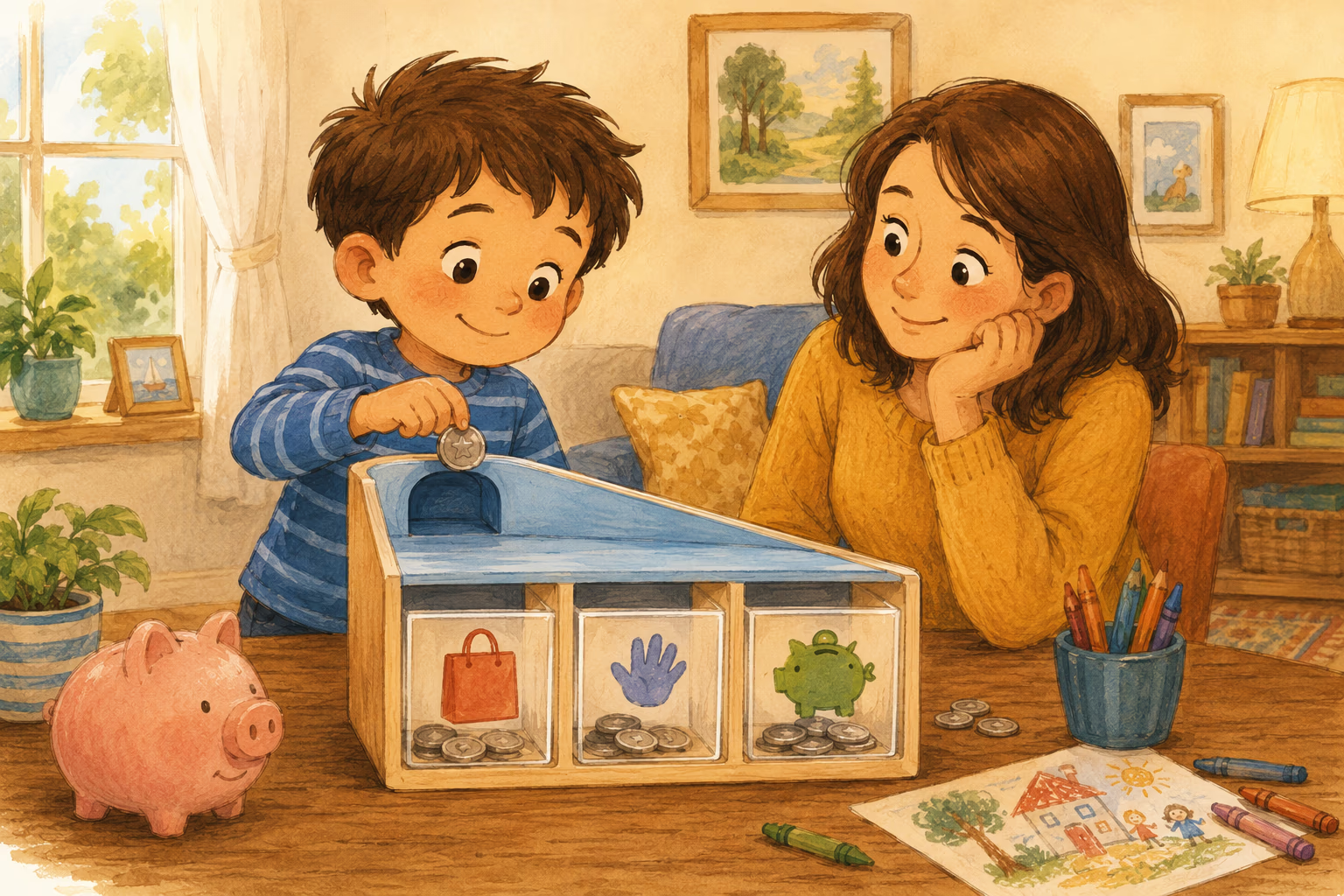
Save, Spend, Give Jars: A Simple System That Actually Sticks
There’s a money lesson most adults wish they’d learned earlier: money has more than one job. Some of it should grow. Some should circulate. Some should help.
The save / spend / give jar system is the cleanest way to teach that to kids — and it works at almost any age. Three jars, three labels, one rule for what goes where. Five minutes to set up. A lifetime of mental scaffolding.
Here’s how to run it.
Why three jars instead of one piggy bank
A traditional piggy bank teaches one thing: keep money. That’s a fine start, but it leaves out the harder lessons.
- A kid who only saves never learns to choose what to spend on.
- A kid who only spends never feels the satisfaction of reaching a goal.
- A kid who never gives never learns that money can be a tool for values, not just stuff.
Three jars force the choice every time money comes in. That’s the whole point. The choice — not the math — is what builds the habit.
Research from the University of Arizona found that kids who learn to give early develop a healthier relationship with money overall. Giving rewires how they think about money’s purpose.
The three jars, explained
Save
The save jar is for goals that take more than one allowance cycle to reach. A new Lego set. A bike. A trip with friends.
The rule: money in the save jar is off the table until the goal is hit. That’s the whole exercise. If they raid it, the lesson breaks.
Spend
The spend jar is for small, immediate wants. Snacks at the store. A new pack of stickers. The thing they decide they need at Target on a Tuesday.
The rule: this money is theirs to blow. No lectures about impulse buys (yet). Spending on the wrong thing is also a lesson — sometimes the most important one.
Give
The give jar is for causes, gifts, or people they want to help. A favorite animal shelter. A birthday present for a sibling. A donation jar at the grocery checkout.
The rule: it must go to someone or something other than the child. No buying themselves a treat and calling it a gift.
How much goes in each jar?
There’s no perfect ratio, but a common starting split is 50 / 40 / 10:
- 50% to save
- 40% to spend
- 10% to give
For older kids working toward a real goal, shift to 60 / 30 / 10 or even 70 / 20 / 10. For younger kids who get bored fast, start with 30 / 60 / 10 so they feel the spending muscle first.
The most important thing isn’t the ratio — it’s that the split happens every time money comes in, automatically, before the kid decides what to do with it. Set the ratio. Stick to it for a month. Adjust if it isn’t working.
Setting it up in five minutes
- Grab three jars. Mason jars are perfect because kids can see the money. Tape on labels: SAVE, SPEND, GIVE.
- Pick a split. Start with 50 / 40 / 10 or whatever fits your kid’s age. Write the ratio on the labels.
- Plan a regular payday. Same day every week. Sunday is easiest because it sets up the next school week.
- Sort together the first month. Hand them their allowance in small bills or coins so the split actually works. ($5 → $2.50 / $2 / $0.50.)
- Talk about each jar once a week. “What are you saving for? What did you spend on? Who got your give money?” Two sentences each. That’s it.
When jars stop working
The jar system has a built-in expiration date. It works beautifully for ages 4-8 because money is concrete — you can see the saving goal getting closer.
It starts to crack around ages 9-11 because:
- Bills get awkward. Splitting $7 across three jars when most of their income comes as a $20 birthday check doesn’t divide cleanly.
- Goals get bigger. Saving for a $200 game console in coins takes forever and feels invisible after the first month.
- They start spending where money isn’t physical. In-app purchases. Subscriptions. Cards. Cash in a jar can’t follow them there.
That’s usually when families switch from jars to a digital version of the same system — three buckets in an app instead of three jars on a shelf. Same lesson, more flexibility, and it follows the kid into the digital world. (Yes, Digital Piggy Bank does this. So do a few others — see our comparison.)
Common mistakes to avoid
- Letting them raid the save jar. Once you do, the jar means nothing. Better to let them feel a missed goal than to undermine the rule.
- Skipping the give jar because “they’re too young.” Even small kids understand giving when it’s tied to a specific person or pet. Don’t wait.
- Forgetting weeks. A jar system breaks fast if payday is inconsistent. Pick a day, stick to it, even when allowance is small.
- Mixing earned money with gift money. Both should get split. A $20 birthday check is a great teaching moment, not a free spend.
- Doing the split for them long-term. After the first month, they should be the ones counting and sorting. The friction is the lesson.
A note for parents who didn’t grow up with this
If save / spend / give wasn’t part of your childhood, this can feel a little earnest. Three jars? Really? Yes, really. The system works because it’s blunt. There’s no algorithm, no app to argue with, no parent to negotiate. The money goes where the labels say.
Your kid will outgrow the jars. They won’t outgrow the habit of asking, every time money shows up, “which job is this for?”