Money Talks at Home: How Casual Chats Make Your Kid Smarter About Money
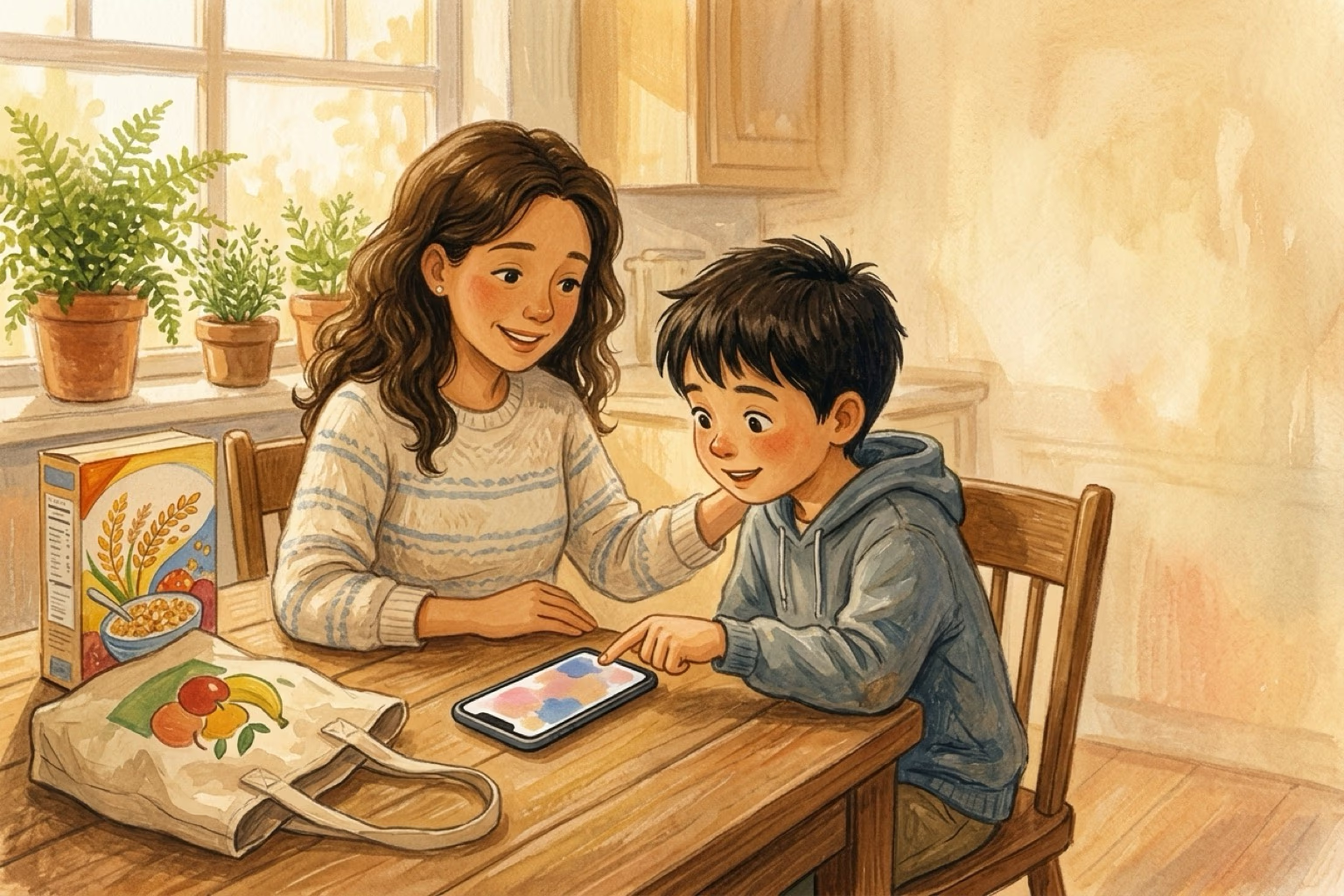
You’re in the checkout line. Your 11 year old watches you swap the name brand cereal for the store brand and asks, “Why’d you do that?”
You shrug. “Same cereal, two dollars cheaper. I’d rather keep the two dollars.”
Thirty seconds. No worksheet, no lecture. You just taught a money lesson without planning one.
Most parents think teaching kids about money means sitting them down for a big serious talk. The research points somewhere easier. The small, ordinary conversations add up to more.
Does talking about money with your kids really make a difference?
Yes. The best evidence comes from the OECD, the international group behind the PISA tests that compare students around the world. In 2022, PISA tested the financial literacy of 15 year olds and asked them how often they talked about money with their parents.
The OECD’s 2024 analysis found that students who discussed their own spending decisions with their parents weekly or monthly scored 12 points higher in financial literacy than students who never did. That gap held even after accounting for gender and socio economic background.
Two honest caveats. First, these were teenagers, not 11 year olds. Second, the OECD says plainly that the data can’t prove cause. Kids who already understand money might simply ask more questions. Still, the pattern is clear enough to act on, and the habit is far easier to build at 11 than at 15.
Why everyday moments beat “the big talk”
The Consumer Financial Protection Bureau studied how kids develop money skills and landed on a simple conclusion. In its Building Blocks report, the CFPB found that parents are “typically the primary agents of financial socialization during elementary and middle school ages.”
In plain English, you’re the main money teacher, whether you signed up for it or not. (For more on that, see Moms Are the First Money Teachers.)
The CFPB recommends using regular errands as your classroom: dining out, buying gas, grocery shopping, paying the monthly bills. These moments work because they’re real. Your kid sees an actual price, an actual choice, and an actual tradeoff.
Your kids also pick up a lot just from watching you, which we covered in Your Kids Are Watching Your Wallet. Talking out loud turns that watching into understanding.
What to talk about at 11 and 12
Tweens are ready for real numbers and real decisions. Good topics at this age:
- Their own spending decisions, before and after they buy
- Wants versus what’s left in their budget
- How you compare prices and decide what’s worth it
- Saving for something big that takes weeks or months
- What everyday things really cost, like groceries, a phone plan, or a tank of gas
- How tapping a card or phone still spends real money
If your kid stumbles on words like interest or budget, our list of 30 money terms every kid should know by age 12 is a good companion.
What you can keep private
You don’t have to share your salary, your debt, or every money worry. Share the decisions and the tradeoffs, not the stress. “We’re skipping takeout this week so we can save for the trip” teaches plenty. Your kid doesn’t need the full spreadsheet.
10 money conversation starters that don’t feel like a lecture
Keep them short and tie them to something that’s already happening.
- “What would you buy with $20 right now? What about if you had to wait a month?”
- “Which of these two do you think is the better deal?”
- “How much do you think this grocery trip cost?”
- “What’s something you bought that you’re glad you got? Anything you regret?”
- “If you had $100, how would you split it between saving, spending, and giving?”
- “Why do you think this costs more here than online?”
- “What do you think our electric bill is each month?”
- “Is that ad trying to make you want something? How?”
- “What are you saving for right now? How close are you?”
- “If you could only buy one of those two things, which would it be?”
The car is a great place for these. Nobody has to make eye contact, and there’s a natural end when you pull into the driveway.
Give them a real decision to talk about
Conversations stick when your kid has a real stake. The same OECD analysis found that students who could make spending decisions on their own scored about 30 points higher in financial literacy than students who couldn’t. Talking and autonomy work as a pair.
So give your kid some money that’s genuinely theirs to manage, and let them make the call. That’s when the best questions show up on their own.
This is where Digital Piggy Bank makes the conversations easy. When kids can see their balance, they start asking questions without any prompting from you. “How much do I have?” “Can I afford this?” “If I wait two more weeks, will I have enough?” Each of those questions opens a real money conversation, about their own money, at the exact moment it matters. You don’t have to invent a teaching moment. Your kid hands you one.
Parent Tip: Try a weekly “money minute”
Pick one moment that already happens every week. The Saturday grocery run, Sunday dinner, the drive to practice. Make it your money minute: one question, one short answer, no lecture.
That’s it. One minute a week adds up to more than 50 small money conversations a year, and none of them feel like school.
Start with one conversation this week
You don’t need a plan or a perfect script. Pick one conversation starter from the list above and try it this week. If your kid has their own money in Digital Piggy Bank, start by looking at their balance together and asking what they’re saving for. The rest of the conversation tends to take care of itself.