Piggy Banks to Goals: Simple Saving Tips for Kids
Feb 4, 2026
Piggy Banks to Goals: Simple Saving Tips for Kids Ages 5–12
If you’ve ever watched your child dump out their piggy bank just to count the coins again, you know this feeling. They’re proud. Curious. Excited.
But then reality hits.
That toy costs way more than what’s inside the pig.
Saving feels hard for kids because money is abstract, patience is learned, and waiting goes against everything their developing brain wants to do. That’s normal. The good news is that a few small changes can turn saving from frustrating into motivating.
Let’s talk about how to move from a basic piggy bank to real savings goals your child actually sticks with.
Why Saving Feels Hard for Kids (and Totally Normal)
Kids live in the now
Kids ages 5–12 think in the present. When they see something they want, their brain says, “I want it now.” Long-term thinking takes practice and support.
Abstract money is confusing
A pile of coins or numbers on a screen doesn’t mean much unless it connects to something real. Without context, saving feels like giving something up instead of working toward something better.
Why Savings Goals Change Everything
Goals make money visible
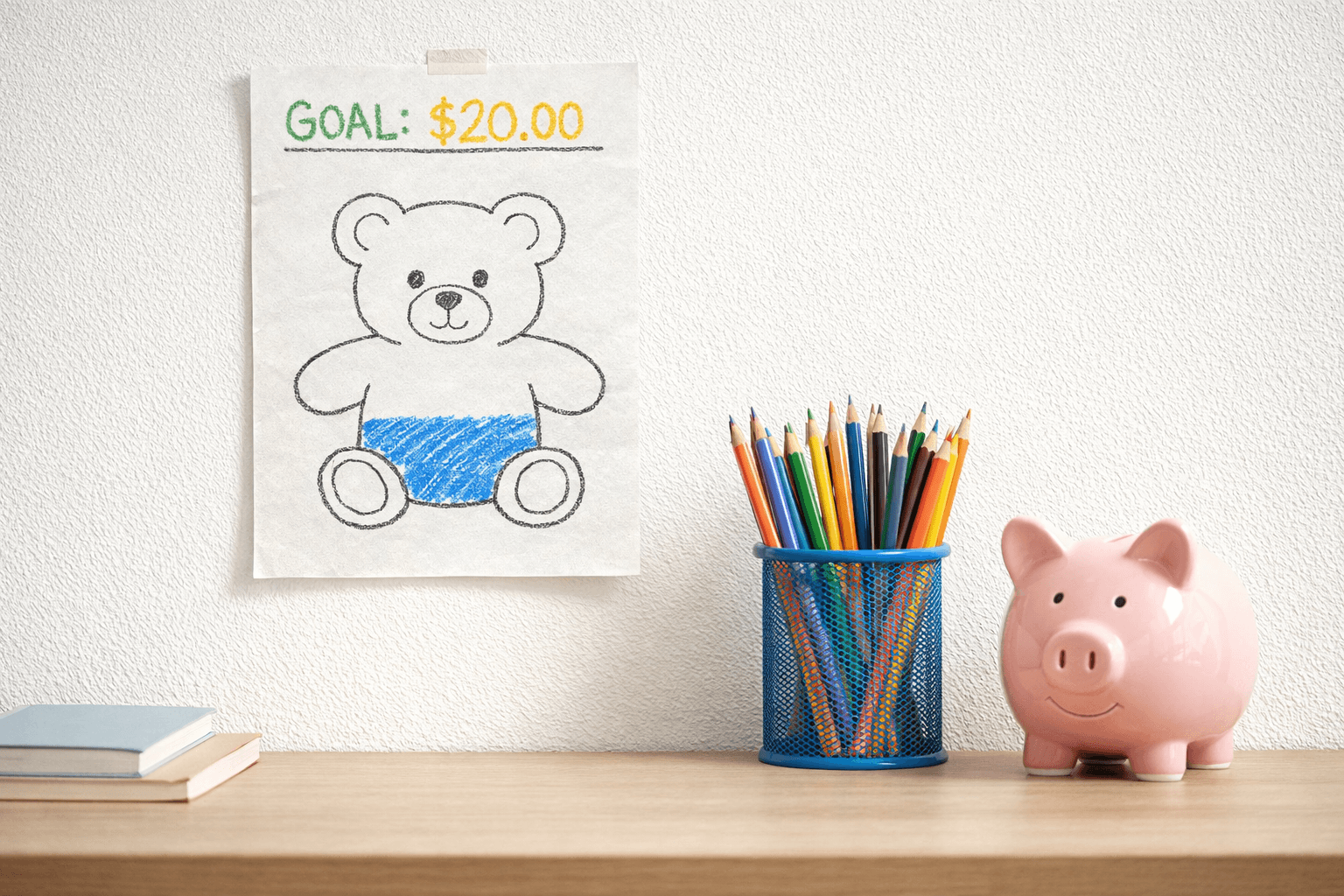
When kids know exactly what they’re saving for, money becomes a tool instead of a mystery. A goal turns “don’t spend” into “I’m getting closer.”
Progress builds confidence
Every dollar added feels like a win. Kids start to see that their choices matter, which is a powerful lesson that carries into adulthood.
How to Set a Savings Goal Your Child Cares About
Let your child choose the goal
This part matters more than parents think. When kids pick the goal, they own it. Whether it’s a toy, game, bike, or experience, motivation comes from choice.
If you pick the goal for them, saving feels like a rule. If they pick it, saving feels like a plan.
Keep the goal realistic
A $15 goal teaches more than a $200 one. Start small so success comes sooner. You can always set a new goal once they experience the win of reaching the first one.
From Piggy Bank to Digital Goals
The limits of physical piggy banks
Piggy banks are great for introducing money, but they have limits. Kids can’t easily see progress, separate money by purpose, or understand how close they are to a goal.
Everything blends together.
Why visual tracking helps kids stick with it
When kids can see their savings grow toward a specific goal, motivation increases. Visual progress makes abstract concepts concrete.
A digital piggy bank adds clarity by showing:
How much is saved
How close they are to the goal
How saving compares to spending and giving
It doesn’t replace conversations. It supports them.
What Research Says About Early Money Habits
Why ages 5–7 matter
Research from National Association of Extension Family and Consumer Sciences shows that foundational money habits often begin forming between ages 5 and 7. Early experiences with saving shape how kids think about money later in life.
Long-term impact of early saving
Kids who practice saving early tend to develop better self-control, goal-setting skills, and confidence around money decisions as they grow. These habits don’t appear overnight. They build slowly through repetition and support.
Common Saving Mistakes Parents Make (and Easy Fixes)
Making it too complicated
Kids don’t need spreadsheets. They need clarity. One goal. Simple rules. Clear progress.
Focusing only on saving, not balance
Saving is important, but so is learning when to spend and give. Kids learn best when they see money as something to manage, not something to hoard.
A balanced approach teaches flexibility and responsibility.
Helping Kids Stay Motivated Until They Reach the Goal
Celebrate progress, not just results
Acknowledge effort along the way. A quick “You’re halfway there” can mean more than waiting until the end.
Use check-ins, not pressure
Weekly or bi-weekly check-ins keep saving top of mind without turning it into a battle. Ask questions. Let them explain their choices.
Parent Tip (Real Life)
One parent shared that her 7-year-old stopped asking for impulse toys once he could see his savings progress. He started saying things like, “I don’t want to mess up my goal.” That shift didn’t come from lectures. It came from visibility and ownership.
Sources & Further Reading
Collins & Odders-White, 2021 (cited in NEAFCS Journal), on allowances boosting responsibility, https://neafcs.memberclicks.net/assets/documents/journal/2022-jneafcs/Money%20Milestones.pdf.