No Free Lunch: How Chore Earnings Teach Kids the Real Value of Money
Picture it. Friday rolls around. You hand your 9 year old $10. No effort, no expectation, just a weekly deposit into their pocket. They shove it in their backpack and forget about it by Saturday morning.
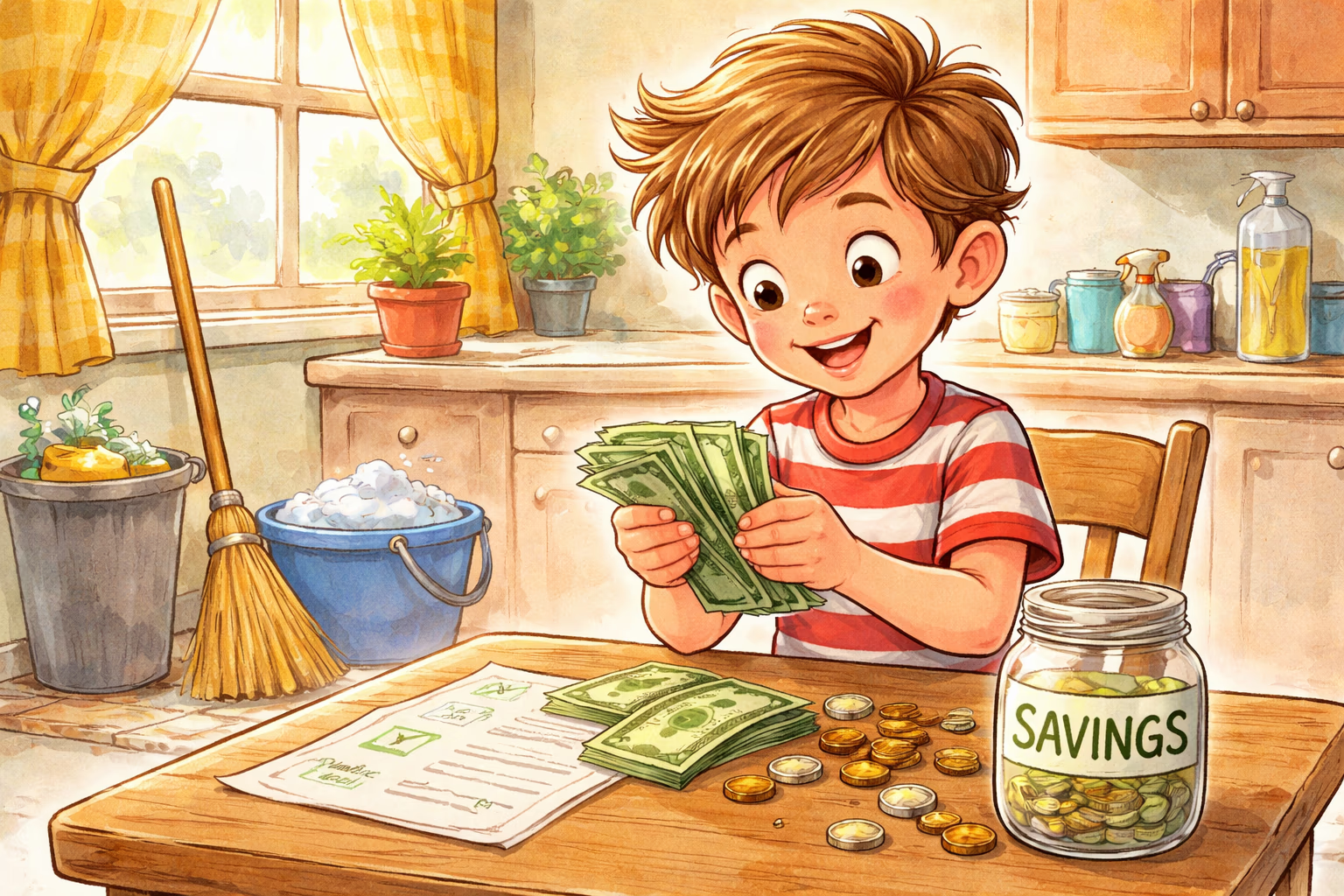
Now picture the same kid on Thursday afternoon. Mowing the strip of grass, hauling out the trash, wiping down the kitchen counters. Friday comes. You hand them the same $10. This time, they count it. They think about it. They ask if there’s one more job they can do to hit $15.
Same dollars. Completely different lesson.
That second scene is what a chore based allowance looks like, and decades of research suggests it’s a much better way to raise a kid who actually understands money.
The hidden cost of a no strings allowance
A free allowance feels generous. It’s easy on everyone. Set a number, set a day, done.
The problem is what it quietly teaches. When money shows up every week without effort, a kid learns that money is something that appears. It’s not connected to work, or skill, or decisions. It just exists. And when money feels like a given, you don’t think about it much.
That’s exactly what one of the most respected researchers on this topic found.
What 50 years of research says about kids and money
Lewis Mandell, a finance professor and former dean of the management school at SUNY Buffalo, spent years digging into decades of data on allowance and its effect on kids. His conclusion was striking. Kids who received an unconditional allowance, meaning money with no strings attached, scored the worst on financial literacy tests.
In his own words, those kids “think far less about money in general.” They had less practice weighing tradeoffs, less experience seeing effort turn into reward, and fewer built in reasons to plan ahead.
Meanwhile, kids who had to earn their money tended to think more carefully about it. They’d worked for it. They noticed when it was gone. They started asking smarter questions.
That’s a finding every parent should pay attention to.
Why ages 8 to 10 is the right window to start
Kids this age sit in a sweet spot. They can count and do simple math. They can track multiple things at once. They understand cause and effect, and they’re starting to plan beyond the next five minutes.
More importantly, they’re still forming their relationship with money. Habits set now stick. Habits set at 15 have a lot more baggage to unlearn.
If you’ve been handing out a free allowance, 8 to 10 is the age where switching to a chore based system lands cleanly. Kids this age can handle the shift without feeling punished, and they’re mature enough to get genuine pride out of earning.
How to build a chore for pay system that actually works
Chore based allowance is simple in theory and easy to mess up in practice. A few rules help.
Separate family chores from paid chores
Not everything a kid does around the house should come with a paycheck. Making their bed, clearing their own plate, feeding the dog they begged for, that’s just being part of the family. Paid chores should be real work that actually helps the household. Think yard work, deep cleaning, laundry help, or washing the car.
This line matters. If you pay for every little thing, your kid starts expecting payment for everything, including basic human decency.
Set clear rates
Write the chore list down. Assign a dollar amount to each task. A rate sheet kills the “how much is this worth” negotiation every single time.
For an 8 to 10 year old, jobs in the $1 to $5 range usually hit right. Small enough that they have to do a few to get something meaningful, big enough to feel real.
Pay on a schedule
Pick a payday. Stick to it. Friday works for most families.
Random payouts train kids to ask and nag. A regular payday trains them to track their earnings through the week and anticipate payout day, which is exactly the planning habit you want them building.
Split every paycheck into save, spend, and give
When your kid gets paid, don’t let it all go into “spend.” Split it right away. A simple formula like 50 percent spend, 30 percent save, 20 percent give teaches three financial skills at once and builds the habit early.
This is the rule that sounds easy and falls apart by week three. Doing the math on a $7 payout every Friday gets old fast, and most parents quietly abandon it. Digital Piggy Bank solves that. Set your save, spend, and give percentages once, and every chore payout you log automatically divides itself across all three buckets. No math, no missed entries, no “I’ll fix it later.”
Avoid the “everything has a price” trap
Here’s where a pure chore for pay system can backfire. Tying every single task to a dollar figure has a downside, and the Money Management International team that covers this topic points it out well. If a kid sees every act of contribution as a transaction, you’re shaping a worldview where helping has to come with a price.
Keep some things unpaid on principle. Family meals. Pitching in when a sibling is sick. Helping you carry groceries in from the car. These aren’t gigs. They’re part of being in the family.
Parent Tip
Try this rule at your house. If I’m standing right next to you and I ask for help, it’s a family thing. If it’s on the chore board, it’s a paid thing. That one distinction solves about 90 percent of the “do I get paid for this” questions.
Track it or it didn’t happen
Here’s the part parents underestimate. The earning matters, but the tracking is what makes it stick.
Kids who watch their money add up learn patience. Kids who see it split across save, spend, and give start thinking in categories instead of just “mine.” And kids who can pull up a running log of what they’ve earned feel a sense of ownership that cash in a drawer never gives them.
A physical piggy bank is a great start. For 8 to 10 year olds who want to see the numbers, a digital version works even better. Digital Piggy Bank gives your kid a running log of every chore they’ve done, what they earned, and how each of their three buckets is growing over time. They can watch their save balance climb toward a goal in real time. No spreadsheet. No missed entries. No “where did that $5 go.”
If you’re ready to swap the Friday handout for something that actually teaches, start small. Pick three paid chores. Set the rates. Run it for a month and see what happens.
You might be surprised how fast a 9 year old starts thinking about money when they’re the one earning it.